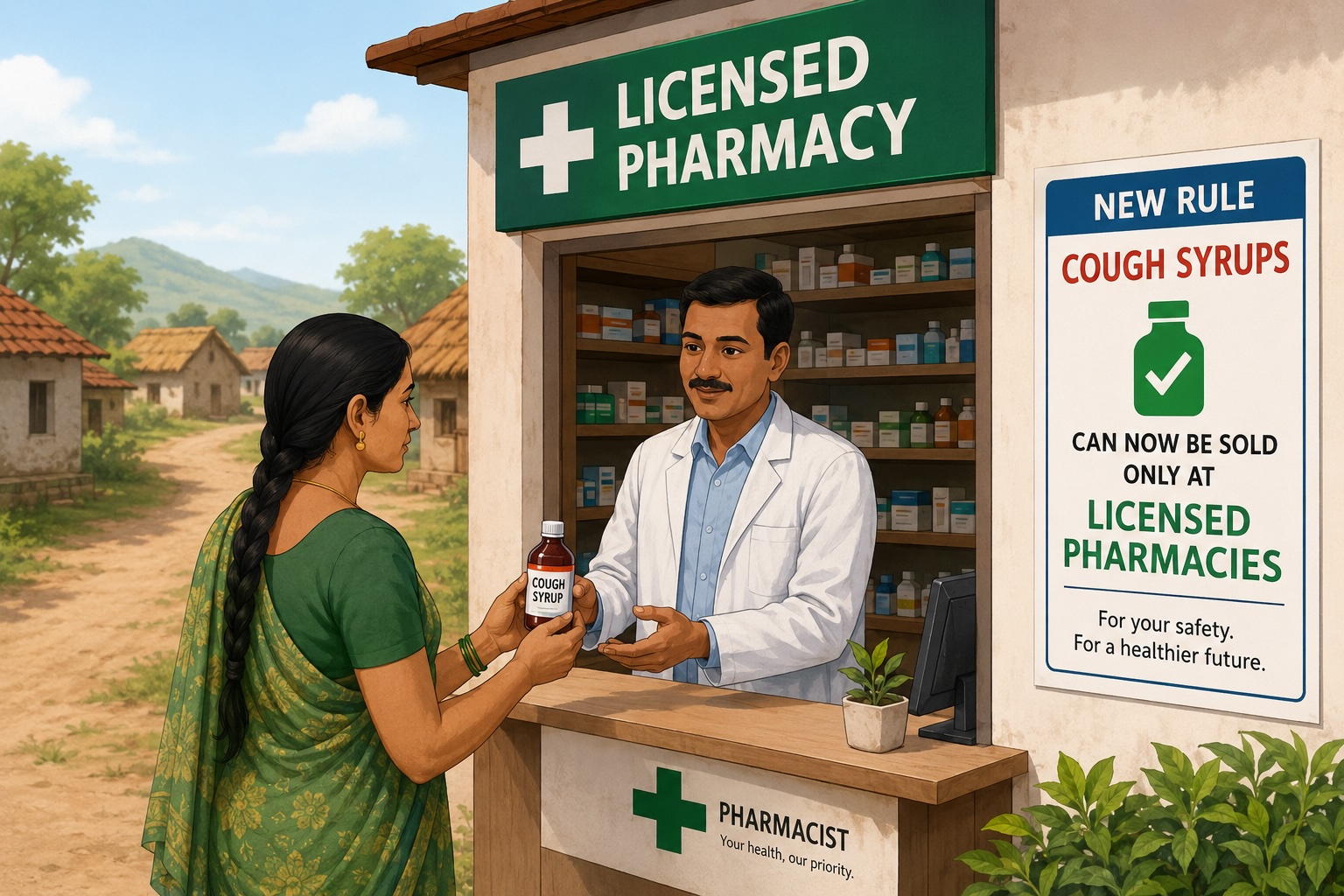
People living in even the smallest villages across India are set to experience a noticeable change in the way they access cough syrups. Going forward, these medicines will need to be purchased from licensed pharmacies only, rather than from general stores, informal sellers, or other outlets that do not hold a valid retail drug licence. This shift follows an amendment to the Drugs Rules, 1945, notified by the Ministry of Health and Family Welfare.
At first glance, this may sound like a small regulatory adjustment. However, for many consumers — especially in rural and semi-urban areas — it represents a meaningful change in how a commonly used household medicine is accessed. Cough syrups are often among the most frequently purchased over-the-counter remedies, particularly during seasonal changes, flu outbreaks, and in areas where respiratory infections are common. Because of this, even a small change in availability channels can have a wide-reaching impact on everyday healthcare habits.
Earlier, India had a long-standing exemption built into its drug retail regulations. Under this provision, villages with populations below 1,000 people were allowed some flexibility in how certain medicines were sold. In practical terms, this meant that some non-licensed shops or local practitioners in these small settlements could sell basic medicines, including cough syrups, without needing to meet the same licensing requirements that apply to pharmacies in larger towns and cities.
This exemption was designed with accessibility in mind. In many remote areas, licensed pharmacies may not be easily available within walking distance. The intention was to ensure that people in very small or isolated communities could still access basic medicines without having to travel long distances.
However, the latest amendment removes cough syrups from this exemption category.
“The amendment has been undertaken to strengthen regulatory oversight of syrup formulations and to align the exemption framework with contemporary public health and safety requirements,” according to the Ministry of Health and Family Welfare.
“The measure is expected to promote responsible distribution and sale of cough syrups while ensuring greater compliance with regulatory standards across the country,” it added.
This means that even in the smallest villages, cough syrups can now only be sold through properly licensed pharmacies or authorised drug outlets. Any seller or distributor dealing with these products must now comply with the same regulatory standards that apply across the rest of the country, including obtaining the necessary retail drug licences.
One of the key concerns behind this policy amendment is the potential misuse of certain cough syrup formulations. Some cough syrups contain ingredients that, if consumed improperly or in large quantities, can be misused or diverted for non-medical purposes. When such medicines are widely available through unregulated channels, it becomes more difficult to track how they are stored, sold, or consumed.
Longer travel for cough syrup?
For consumers, it is important to understand that this shift does not ban cough syrups. It also does not automatically make all cough syrups prescription-only medicines. These products will still be available in the market and can still be purchased when needed. The key difference lies in where and how they are sold.
Previously, a person in a small village might have bought a cough syrup from a neighbourhood shop or a local practitioner without visiting a pharmacy. Going forward, that same purchase will likely require a visit to a licensed pharmacy outlet.
For many people in urban areas, this may not seem like a significant shift because pharmacies are relatively accessible. However, beyond the metropolitan cities and especially in rural regions, the change could mean longer travel times or fewer nearby options, depending on how well pharmacy networks are distributed in a particular area.
At the same time, the government’s position is that improved safety and regulation outweigh the inconvenience caused by reduced informal access. The focus is on ensuring that medicines are dispensed responsibly and that consumers receive genuine, properly stored products.
From a consumer safety standpoint, one of the key expected benefits is improved quality control. Licensed pharmacies are required to follow storage guidelines, which helps ensure that medicines are kept under appropriate conditions. This is especially important for syrup-based formulations, which can be sensitive to temperature and storage practices.
Another benefit is the reduction of counterfeit or unregulated products in circulation. When medicines pass through formal channels, it becomes harder for unauthorised or substandard products to enter the market.
Additionally, pharmacists can provide guidance to consumers on correct dosage, potential side effects, and safe usage. This can be particularly valuable for families with children or elderly members who frequently use cough syrups.
Impact on rural communities
The most immediate impact of this change will be felt in rural and remote areas. In many small villages, general stores or informal vendors often serve as the first point of contact for minor healthcare needs. These shops typically stock basic items like pain relievers, antiseptics, and cough syrups to serve daily demand.
With the exemption removed, such shops will no longer be allowed to sell cough syrups unless they meet licensing requirements. This could change consumer behaviour significantly, especially for households that are used to quick, local access to medicines.
Residents may now need to rely more heavily on nearby towns or larger villages where licensed pharmacies operate. For some, this could mean planning ahead for routine healthcare needs rather than making last-minute purchases from local shops.
There is also a broader concern about accessibility. In areas where pharmacy density is low, consumers may face practical difficulties in obtaining medicines quickly. This could be particularly relevant during nighttime illnesses, emergencies, or seasonal outbreaks when demand spikes.
For small shop owners and informal sellers, the amendment brings a clear compliance requirement. Those who previously relied on the exemption to sell basic medicines will no longer be allowed to stock cough syrups unless they obtain the appropriate drug retail licence. This may require investment in infrastructure, training, and regulatory approvals, which some small businesses may find challenging. As a result, some retailers may choose to stop selling medicines altogether, while others may consider upgrading their operations to meet licensing standards.
The change may also encourage consolidation of medicine sales into licensed pharmacies, potentially increasing the role of professional pharmacists in rural healthcare delivery.
Possible challenges for consumers
Despite the benefits, there are also practical challenges. The most obvious is accessibility, especially in areas where pharmacies are not nearby. Consumers may have to travel farther or depend on fewer retail points.
There is also the issue of awareness. Some consumers may initially be unaware of the change and may continue looking for cough syrups in general stores, only to find them unavailable.
Over time, the success of this policy will depend on how effectively licensed pharmacies are made accessible and how well consumers are informed about the new rules.
Overall, this amendment represents a shift toward tighter regulation of everyday medicines in India’s rural markets. While the change may feel disruptive in the short term, particularly for villages that relied on informal access points, the broader goal is to create a safer and more accountable system for medicine distribution.
For consumers, the key takeaway is simple: cough syrups remain available, but they will now come through more controlled and professional channels. The focus is on ensuring that when people buy these medicines, they are getting safe, properly handled products dispensed in a responsible way.
In the long run, the success of this move will depend on balancing two important needs — ensuring easy access to basic healthcare products while also strengthening safeguards that protect public health.