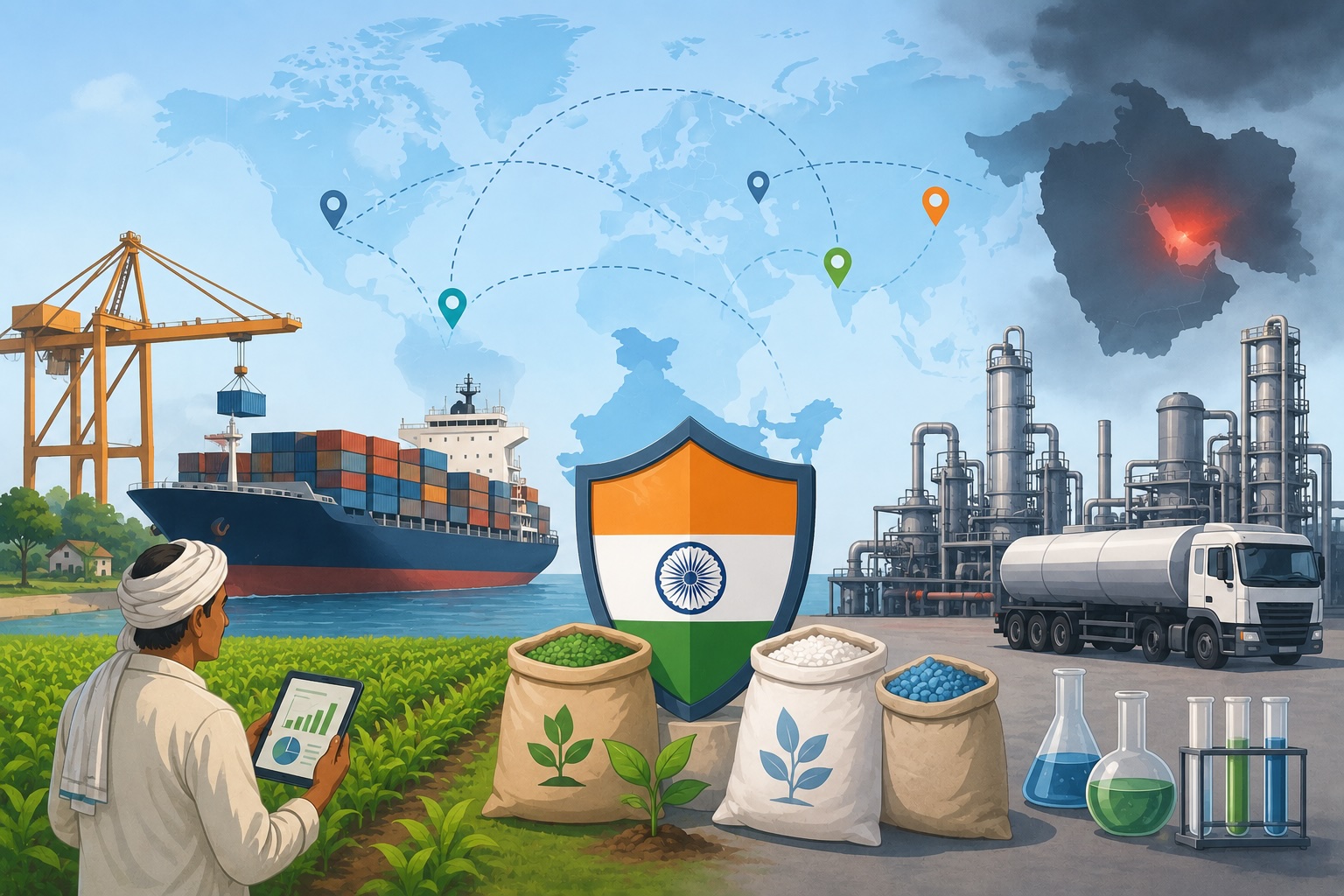
India said it has taken a series of measures to protect fertilizer supplies and critical industrial chemical imports as geopolitical tensions in West Asia disrupted global supply chains during 2025-26.
According to the world’s largest democracy, the conflict raised shipping and insurance costs, delayed cargo and caused prices of fertilizers and raw materials to fluctuate. Imports of ammonia, phosphoric acid and sulphur were among the hardest hit. Potash imports also became more expensive because of disruptions in global shipping.
Despite these challenges, the government said fertilizer supplies remained largely stable. It credited this to buying from more countries, securing long-term supply agreements and closely monitoring stocks and distribution.
“The government has undertaken sustained efforts to diversify import sources so as to mitigate risks arising from global supply chain disruptions,” India’s Chemicals and Fertilizers Minister, Jagat Prakash Nadda, informed in a written reply in the Lok Sabha, the lower house of the bicameral Parliament of India.
“The government has undertaken sustained efforts to diversify import sources so as to mitigate risks arising from global supply chain disruptions,” Nadda added.
To strengthen supplies, India temporarily removed customs duty on 40 essential chemicals and petrochemicals until July 15, 2026. It suspended quality control rules for imports of linear alkyl benzene (LAB), butyl acrylate and morpholine. The government said these steps would allow companies to buy critical chemicals from a wider range of suppliers.
To reduce dependence on a small number of countries, the government encouraged Indian fertilizer companies to sign long-term agreements with overseas suppliers. It also asked Indian diplomatic missions to identify new sources of fertilizer imports in different countries.
The South Asian nation also supported joint purchases of fertilizers and raw materials such as ammonia and sulphur through industry groups. According to Nadda, this would help companies negotiate better prices, improve price transparency and ensure a steady supply of key inputs.
India plans fertilizer supplies before every crop season. The Department of Agriculture and Farmers Welfare estimates fertilizer demand for each state in consultation with state governments. Based on these estimates, the Department of Fertilizers prepares monthly supply plans, tracks fertilizer movement through the Integrated Fertilizer Management System (iFMS) and holds weekly meetings with state officials to address any shortages.
The government said these measures have helped maintain adequate supplies of urea, diammonium phosphate (DAP), muriate of potash (MOP) and NPKS fertilizers during the 2025-26 financial year and the ongoing 2026 kharif planting season, which runs from June to October.
For phosphatic and potassic fertilizers, India continues to follow the Nutrient Based Subsidy (NBS) scheme. Under this system, companies can import these fertilizers under an Open General License. The government said this gives companies more flexibility to import or manufacture fertilizers based on market conditions and helps keep supplies available.
India moves to secure critical chemical supply chains
India has also taken steps to protect the supply of industrial chemicals used by key industries, especially the pharmaceutical sector. The government said the conflict in West Asia disrupted global supply chains. This led to temporary shortages and higher prices for chemicals such as isopropyl alcohol (IPA), ammonia and methanol.
“The government identified certain supply chain risks arising from the ongoing conflict in West Asia, particularly with regard to industrial chemicals and feedstocks used in pharmaceutical manufacturing. These include temporary shortage and price increase of inputs such as Isopropyl Alcohol (IPA), Ammonia and Methanol,” Nadda informed in his written reply.
To reduce these risks, the government worked with the Ministry of Petroleum and Natural Gas to increase the supply of propylene, a key raw material used to produce isopropyl alcohol and propylene glycol. It also arranged additional ammonia supplies for pharmaceutical companies and worked with traders and domestic manufacturers to improve methanol availability.
The government said it is continuing to monitor the supply of industrial chemicals used in sectors such as pharmaceuticals, petrochemicals, water treatment and manufacturing.
Why this matters to Indian consumers
India’s measures are important because they aim to prevent supply disruptions from turning into problems for farmers, businesses and consumers.
The South Asian powerhouse imports a large share of the raw materials needed to make fertilizers. When conflict disrupts shipping routes, imports can become slower and more expensive. If fertilizer supplies fall, farmers may struggle to get enough fertilizer during the sowing season. That can reduce crop yields and affect food production.
By finding new suppliers, signing long-term contracts and closely monitoring supplies, the government hopes to keep fertilizers available across the country. This reduces the risk of shortages during the crucial kharif season.
For consumers, this could help keep food supplies more stable. While food prices depend on many factors, including weather and fuel costs, a steady supply of fertilizers lowers the risk of production-related price increases for crops.
The measures are also significant for India’s pharmaceutical industry. Chemicals such as isopropyl alcohol, ammonia and methanol are used to make medicines and other essential products. Supply disruptions could slow production or increase manufacturing costs.
The government’s efforts to secure these chemicals, reduce import duties on essential chemicals and expand sourcing options are intended to keep factories running and avoid shortages of important industrial inputs.
These chemicals are also used in sectors such as petrochemicals, water treatment and manufacturing. Keeping their supply stable supports a wide range of industries and helps reduce the risk of production delays.
Overall, the measures are designed to make India’s supply chains more resilient at a time of global uncertainty. They may not eliminate the impact of geopolitical tensions, but they can reduce the risk that international disruptions lead to shortages or higher costs for Indian businesses and consumers.