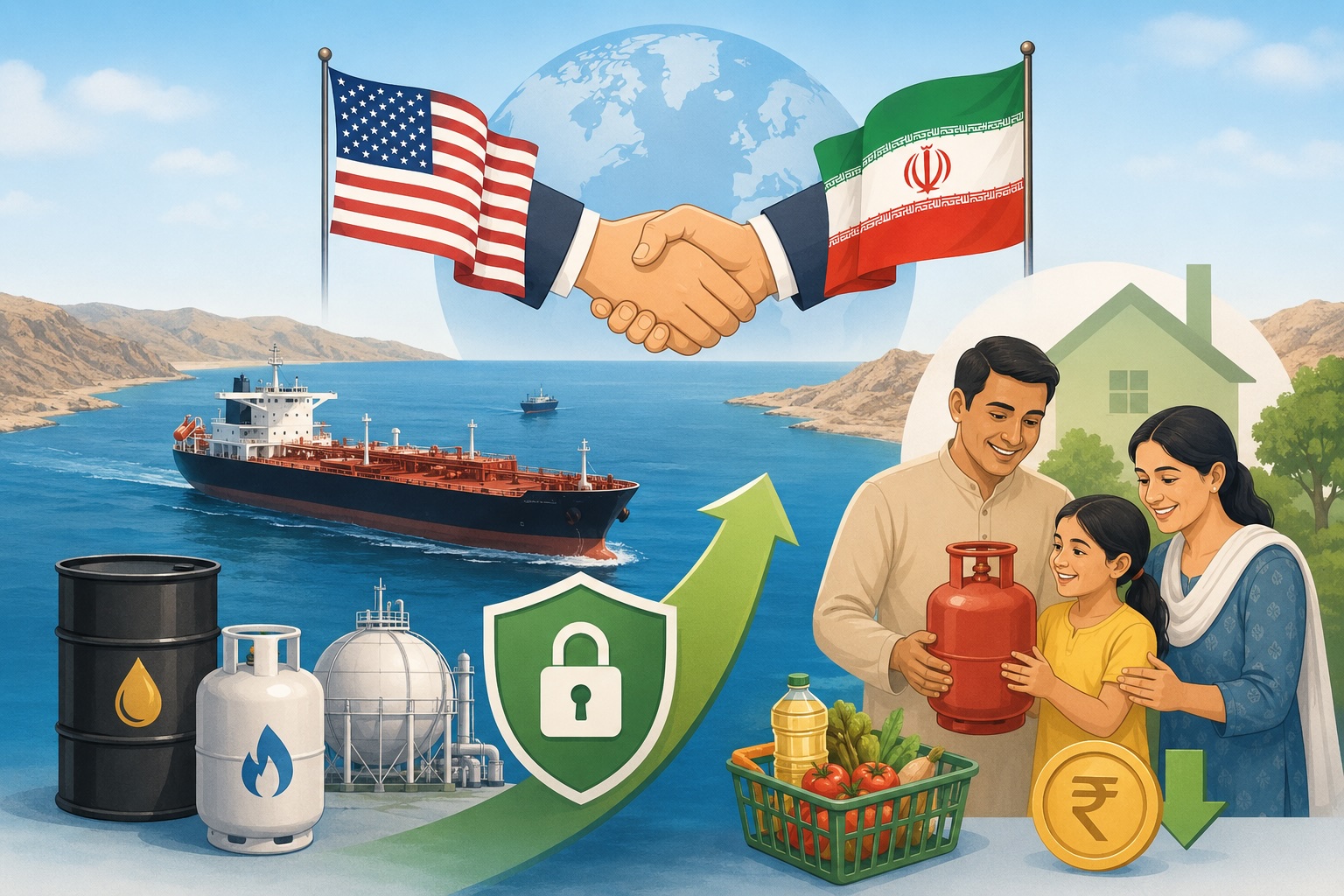
The peace agreement between Iran and the United States is expected to provide economic relief for India. For Indian households, the agreement between Iran and the United States could translate into greater stability in fuel and liquefied petroleum gas (LPG) prices, offering some relief to family budgets while reminding policymakers of the South Asian nation’s significant dependence on energy imports from West Asia.
India imports about half of its crude oil requirements from West Asia, along with nearly 70 per cent of its LPG supplies and around 90 per cent of its liquefied natural gas (LNG) imports.
“I welcome the understanding reached between the United States and Iran on ending the conflict in West Asia, which has caused serious economic disruption across the world and led to loss of life in many countries,” Indian Prime Minister, Narendra Modi, wrote on X.
“India hopes that the implementation of this understanding will help restore peace and stability in the region and ensure the freedom of navigation and commerce. We look forward to deliberations on the remaining issues reaching a sustainable final agreement,” Modi added.
Trump reportedly announced on June 15 that an agreement with Iran had been finalized, describing the deal as complete and stating that it would lead to the lifting of the U.S. naval blockade and the reopening of the Strait of Hormuz, a critical route for global energy shipments. Media reports indicate that a formal signing ceremony is scheduled to take place in Geneva, Switzerland, on June 19.
According to media reports, the framework includes provisions for reopening the Strait of Hormuz, initiating technical discussions on maritime security and mine clearance, establishing a 60-day period for negotiations on Iran’s nuclear programme, and releasing a portion of Iran’s frozen overseas assets.
Why this matters to Indian consumers
The agreement is intended to bring an end to a conflict that began in late February this year when the United States and Israel launched coordinated military operations against Iran, citing concerns over Tehran’s nuclear activities. The confrontation disrupted regional stability, raised energy security concerns, and contributed to volatility in global oil markets.
India, the world’s second-largest importer of LPG, had taken emergency steps in March to manage its gas supply situation. The government directed refineries to increase production and also shifted gas away from less essential uses toward critical sectors. These actions were triggered after disruptions in LNG shipments through the Strait of Hormuz. As a result, India activated emergency measures to ensure priority consumers continue receiving adequate supply.
The country depends heavily on imports, meeting nearly half of its daily gas demand of about 195 million standard cubic metres through foreign sources. Before the disruption and Qatar’s force majeure, India was receiving around 60 million standard cubic metres of gas per day from Middle Eastern suppliers.
Indian consumers mainly felt the impact on cooking gas (LPG) through shortages, price increases, and supply instability. In many places, cylinder prices went up because global energy markets were affected by the conflict, making imported fuel more expensive. Households that depended on subsidized gas often found it harder to get refills on time, leading to long waiting periods or delayed deliveries.
Some areas also experienced uneven supply, where gas distributors could not meet demand consistently. This sometimes forced families to switch temporarily to alternative fuels like kerosene or electricity, which were often more costly or less convenient.
For Indian consumers, the Iran-U.S. peace framework could bring some welcome relief, particularly if it helps keep global oil prices in check. With the Strait of Hormuz set to reopen, concerns over energy supply disruptions have eased, pushing oil prices lower and reducing pressure on India’s import bill.
Over time, this could translate into more stable fuel and LPG prices, while also helping to moderate inflation. Since energy costs influence everything from transportation and food to manufacturing and air travel, lower oil prices can have a ripple effect across household budgets.
However, consumers should not expect immediate cuts in petrol or diesel prices. Retail fuel rates are shaped by several factors, including taxes, exchange rates and refining costs. Any benefits from lower crude prices are likely to be passed on gradually.
If the agreement holds and energy markets remain stable, Indian households could ultimately see relief through lower fuel costs, steadier cooking gas prices and slower increases in the prices of everyday goods and services.
India protests after U.S. strike kills 3 sailors
Earlier this month, tensions between India and the United States rose after a U.S. military strike on a commercial oil tanker in the Gulf of Oman killed three Indian seafarers.
The vessel, identified as the M/T Settebello, was reportedly targeted while transiting the region as part of U.S. operations aimed at enforcing restrictions on Iranian-linked oil shipments. Indian authorities confirmed the deaths and said most of the crew were rescued.
The incident triggered strong public concern in India, with the government lodging a formal protest with Washington and raising the issue at senior diplomatic levels. India has also flagged growing risks for its large seafaring workforce, which plays a key role in global commerce and shipping.
The episode has added strain to already sensitive India–U.S. relations, coming at a time when both sides are engaged in high-level diplomatic engagements, including upcoming meetings this month on the sidelines of international forums.
Reflecting India’s rising global influence, Prime Minister Narendra Modi is set to attend the G7 Summit in Evian, France, scheduled for June 16–17, 2026. During the meeting, he is expected to engage in wide-ranging discussions with leaders of G7 nations, invited partner countries, and senior representatives of international organisations on key global issues.
The summit agenda is broad-based, with a strong focus on strengthening international cooperation and addressing shared global challenges. Key priorities include building new partnerships and reinforcing global solidarity, as well as advancing inclusive and sustainable economic growth that benefits all regions equitably.